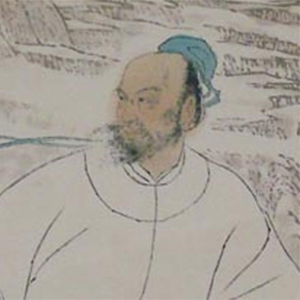
这些是古代中文的诗歌或者歌谣,描写了一位非常孝顺的贾生在面对自己老迈生病的母亲所做出的努力。以下为这些诗歌的英文翻译:
In the second year of the Heavenly Calendar, the western land suffered from continuous famine.
As an official appointed by the Emperor, I was sent to oversee the situation. I heard the lament in the city of Guanzhong: in every ten households, nine were destitute.
The people were walking with bony figures, and those at home were often hungry.
Relatives were neglectful, even as families were torn apart.
In the county of Hu, there was a man named Jia, who diligently served his aged mother with love.
His family consisted of his mother, his wife, and his young child.
Every day, he begged for food with a gourd, hoping to bring back something for his mother.
Unfortunately, one day he returned empty-handed, unable to meet his mother's expectations.
She saw his embarrassment and knew he had nothing to offer. Upon entering their home, she saw that it was filled with cold wind and nothing else.
Even offering her some thin soup, Jia's mother refused to eat, saying that the food was like that given to animals.
She reminded Jia of how she had nursed him in his childhood, offering only the best and most delicious food. Now, he fed her as if she were an animal, which broke her heart.
Moreover, she was old and ill, and wouldn't live for much longer. Jia was afraid and spoke to his wife. They decided to sell their child, no matter who came to buy.
But even in the market, they could not find a buyer. Upon returning home, they wept together.
Jia was so worried about his mother that he would do anything to save her. He took his child somewhere else secretly and bid farewell to his wife.
He tied a rope around his neck and hung it on a tree branch to suffocate his child. However, he was restrained by his wife and could not do it.
He then took out a dagger and cut off pieces of flesh from his child's body to show everyone that he was doing this to save his mother from guilt and grief.
He then explained everything to the officials at the provincial office and they were moved by his story. They immediately sent it up to the court as a special case.
The Emperor might grant leniency on labor service or give honors for such dedication to family duty.
Some received monetary rewards while others were given high ranks or titles as tokens of appreciation for their filial piety.
This was done both to encourage others to show filial piety and also to comfort those who were aged or in need of care. The court always followed through on its decisions promptly.
In the past, there were people who buried their children when they could not care for them due to hardship, but heaven would send treasures to them as compensation.
There were also those who sold their children out of desperation and later regretted it deeply when they saw their children suffer in public places or abandoned on the roadside.
However, it was unheard of for someone to sacrifice their beloved child as a sacrifice for their mother's love as what Jia did. His heart was truly remarkable despite being considered unusual by society at large.
Do not consider Jia as heartless or foolish because love for a lost parent is much greater than any attachment between humans who might be lost again someday soon enough with love lost forever. The most important thing is cherishing love between parents and children; no matter how much money one has or how much one's material possessions are worth; one should never neglect their kinship roots based on filial piety which is the fundamental principle that leads one to be loyal and respectful towards others starting from family ties itself. I hope those who are children today will recite these words throughout their lives as a reminder of what truly matters in life!